
If you’re ready to declutter your memories, then you’re going to have to toss some images. And that may sound impossible if you feel a need to save everything.
That’s why I want to tell you the power of only two photos.

As a photo coach, I tell my clients that you don’t need to save all your memories and, to be honest, you don’t want to try and save all your memories.
I’m writing about this in my upcoming book about gaining peace of mind by decluttering, digitizing, and permanently storing your memories.
Two reasons you don’t need to save all your memories
1 For your enjoyment
If you’ve gathered all your memories into one place and you’re starting to declutter, good for you. Let’s say you’re a grandparent like me and you want to share photos of your childhood with your grandchildren.
It’s fun to think about saving all of your childhood photos to share with your kids.
Except, the reality is you’re likely more interested in their fun moments than your own. You can tell them stories about your growing up years as often as you can but all you need are a few key photos.

It’s hard to enjoy all of our memories, but we can relive key moments. Our minds fill in many details.
If you’re a younger adult in your late 20s or 30s, you’re busy with your job and relationships so you’re probably not going to sift through your own childhood memories very often, ecept when you’re chatting with friends or family about special times like graduations, sports teams, or science fairs.
Think it through:
What key photos and videos have the most meaning for you?
If you’ve inherited boxes of memories from parents or grandparents, can you find about 20 photos, slides, or videos that excite you?
Now try to pare that down to 15 or even 10 items.
If that’s satisfying then you don’t need too try and save every memory, but only save the most meaningful memories.
2 For future generations
I help families leave their legacy through their photos, videos, slides, documents and other memories.
It’s possible to prepare your memories so you can leave them for future generations, like descendants accessing them about 80 to 100 years from now and even farther into the future.

How many photos will they need to see to understand your personality, where you lived, and what was important to you?
This one shot of me after a hole-in-one shows me in a sport I’ve loved playing for years.
Someone clicking in and looking at me in the next century is also going to have dozens of other people to look up and learn about.
You don’t need to save every memory but only the most important memories.
Think it through:
What three things would you want someone in 100 years to know about your life?
The impact of two photos
Don Simkovich is co-authoring my upcoming book and he recently visited his father who’s no longer in his Pennsylvania home that he’s owned since the early 1960s. His dad is now in memory care and living in Southern California.
Don hung five photos on the walls in his dad’s room.
There were photos of the family home, and another of the reservoir that lay below the fields.
There were two other photos.
One of his mother and father sailing in the Caribbean and a photo that the family took in 1979 when Don’s dad changed jobs and they moved away from home for a few years.
His father’s eyes lit up when he saw the photos of him with his wife and the family photo. “What wonderful pictures.”
When he saw the photos of the house and property overlooking the reservoir he asked, “What are these?”
The family photos caused his father’s spirits to pick up.
That’s the power of only two key photos.
Why FOREVER®
This is as close to permanent storage as any service I’ve found.
I use FOREVER® with my clients and for my personal memories because the company guarantees that your files will last a lifetime, plus 100 years. The goal is to have them safe and accessible beyond that time frame.
You own your account so you won’t be locked out and your content isn’t used for marketing and data mining purposes.
Your images aren’t compressed, either, so they stay in the original size.
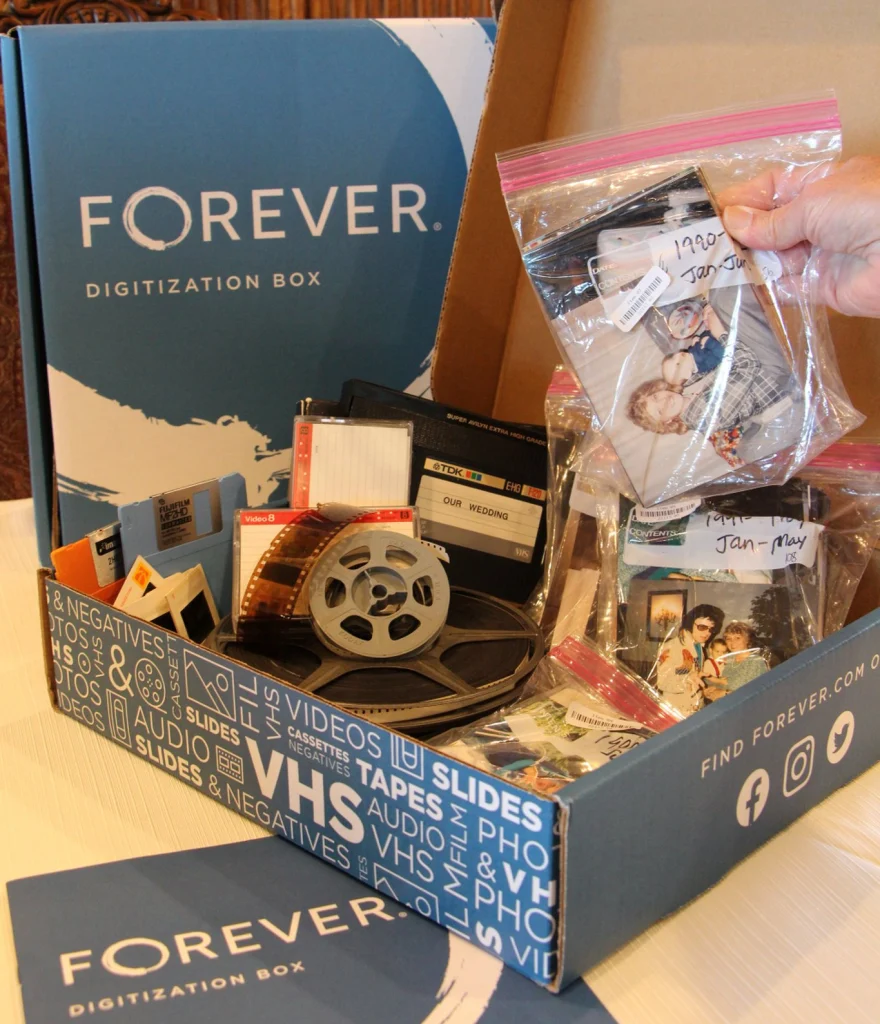
FOREVER® offers versatility. You can:
- Digitize media that you can’t access.
- Store your oldest and newest memories in the same place.
- Create printed photo books from your digital files.
- Research your family history.
- Write your family story with either brief descriptions of photos or book-length chapters.
How can I help you enjoy your family’s memories?
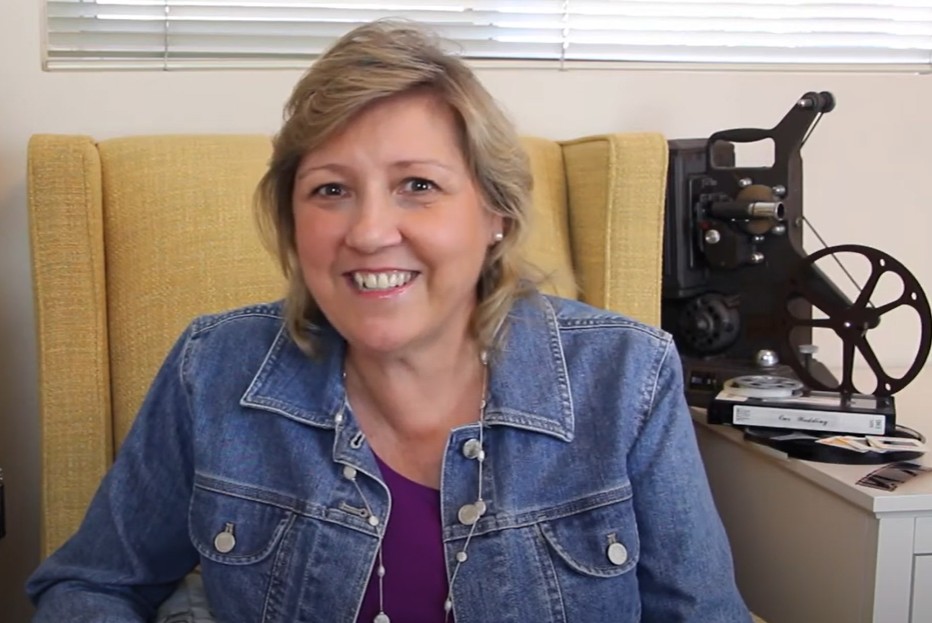
I’ve been a photo coach since 1995 because I get a lot of satisfaction helping families safeguard their most meaningful memories.
Browse through the blogs and check my Events page.
Get in touch and I’ll be glad to help you lay out a Personal Photo Plan that meets your needs.
Your family’s memories are treasures. Safeguard them as they deserve.
Follow me on: